The One Thing I Reach For Every Single Time
In partnership with Madge Goods — use code DIRT15 for 15% off
I didn't expect a jumpsuit to change my life. That sounds dramatic, I know. But here I am, writing an entire blog post about one, so clearly something happened.
The Stella Jumpsuit by Madge Goods came into my world a few months ago and I have worn it so many times since that I'm genuinely a little embarrassed. It's terracotta red, which I would not have picked for myself in a lineup — and yet it is the first thing I reach for every single time I open my wardrobe.
Let me tell you why.
I wear a lot of hats. This jumpsuit wears all of them with me.
Running Dish the Dirt means my week looks a bit wild from the outside. One day I'm on a farm in gumboots getting the actual dirt on Australian flower growers. Another day I'm setting up my recording studio, mic'd up, trying to look like a person who has their life together on camera. Then there's markets, events, the school run, and everything in between.
For a long time I was doing that costume-change thing that no one talks about — where you're essentially getting dressed three times a day to suit three different versions of your life. It's exhausting and honestly, it's a waste of brain space I don't have.
The Stella Jumpsuit fixed that.
What it actually feels like to wear it
It's cotton drill. Proper, substantial, already-washed-and-softened cotton drill that moves with you instead of at you. It has five rear working pockets — real ones, not the fake suggestion of pockets that women's workwear usually offers. It zips up. You go.
The fit is relaxed without being shapeless, which is a harder thing to pull off than it sounds. I can layer a long sleeve underneath it when it's cold (hello, Melbourne winters) and it still looks intentional rather than desperate. I have worn it to record podcast episodes, walked markets in it, turned up to events in it, and yes — I have danced in it, which if you've seen my recent Reel you already know.
It holds up. It looks good. It requires zero thought.
The woman behind it
Madge Goods is the work of one woman — Louisa, a florist and creative who couldn't find a single thing to wear that kept up with her actual working day. She wanted something that could take her from an early morning market to working in a shop to going out straight after, without having to think about it.
So she made it.
I love that story because it's so deeply familiar to me and I suspect to a lot of you reading this. We work with our hands. We're on our feet. We move between worlds in a single day and we want to look like ourselves while we do it. That's exactly what the Stella delivers.
If you're on the fence
Get off it. Sizes 8 to 18, $180, and worth every cent of it. This is not fast fashion — it's the kind of thing you buy once and wear to death, which is exactly what I'm doing.
Head to madgegoods.com and find them at @madge_goods — and use DIRT15 for 15% off.
You can thank me later. Or don't — just send me a photo of you wearing yours. 🌻
Madge Goods gifted me the Stella Jumpsuit and I mean every single word of this.
A Two-Day Immersive Workshop in Kakanui
Kakanui Workshop NZ
26–27 September 2026 · North Otago, New Zealand
There's something about Kakanui that makes it the perfect place to slow down and create. Tucked just south of Oamaru on the New Zealand coast, it's a small seaside settlement where the river meets the sea, the light is soft, and the pace drops the moment you arrive.
Join Rebecca Noble for two unhurried days on the coast, exploring what it takes to build something creative, sustainable, and true to your story.
Come for the flowers. Stay for the coast.
Meet your hosts
Rebecca Noble is the creator of the Dish the Dirt podcast and LLB_ Studios, and curator of Growers Avenue at the Melbourne International Flower and Garden Show. Across the weekend she'll guide you through the craft of storytelling, the foundations of a sustainable business, and the practice of creative thinking — the threads that turn an idea into a livelihood. Expect plenty of hands-on flower work alongside the bigger conversations about building a creative life that lasts.
She's joined by guest Anna Bolland, who leads sessions on mindset and goal setting for small business. Anna's work is all about helping you get clear on where you're headed and find the confidence to get there — so you leave the weekend not just inspired, but with a real sense of direction.
What's included
Two days of immersive workshops with Rebecca Noble
Mindset and goal-setting sessions with guest Anna Bolland
Guided walks and foraging
A beautiful lunch on day two
Plus lunch on day one and two, and a goodie bag filled with wonderful things to take home.
Between the sessions, there's time to slow down and be in the landscape — guided walks, foraging, and a beautiful long lunch to close out day two. We'll send through the exact start time, address, and what to bring closer to the date. For now, the main thing to sort is where you'll lay your head.
Where to stay
You've got options to suit every budget, from a beachfront lodge a few minutes down the road to comfortable bases in Oamaru.
Old Bones Lodge (Kakanui)
The closest and most characterful option is Old Bones Lodge at 468 Beach Road, Kakanui — a beachfront stay just a few minutes from the workshop and about eleven minutes (10km) from Oamaru. It's a stone lodge right by the water with a big shared living and dining area, ocean views, an open fire, and hot tubs to soak in after a day on your feet. There are eight double rooms (so it sleeps around sixteen), plus a handful of powered motorhome sites if you're travelling in a van. Hosts Grant and Karen are lovely, and guests consistently describe it as "affordable luxury" rather than a typical hostel. If a few of us book in together it makes a wonderful group base. Worth booking early — it fills up. (Book at oldbones.co.nz or ph 03 434 8115.)
Backpackers and budget stays in Oamaru
If Old Bones is full or you'd prefer to be in town, Oamaru has a good cluster of backpackers and budget lodgings:
Swaggers Backpackers — friendly, central, and walking distance to the heritage precinct.
Oamaru Backpackers — clean, quality rooms overlooking the harbour.
Empire Hotel Backpackers — budget rooms close to the gardens.
Red Kettle (YHA Oamaru) — a small, homely hostel near Bushy Beach and the penguin colonies.
Any of them put you within easy reach of Oamaru's cafes and the heritage precinct, and it's a short, scenic drive out to Kakanui for the workshop.
Airbnb
There are also plenty of Airbnb options dotted around Kakanui, Oamaru, and the wider coast — everything from cottages and baches near the beach to rooms in town. If you're coming with friends or family, a whole-house Airbnb can be a great-value way to stay together. Browse listings for Kakanui, Oamaru, and Moeraki, and book ahead — the good ones go fast on workshop weekends.
Oamaru: your base for food and coffee
Even if you're sleeping in Kakanui, Oamaru is the place to come for restaurants and cafes. The town is famous for its beautifully preserved Victorian Heritage Precinct, where old whitestone (Oamaru limestone) buildings now house cafes, bakeries, galleries, and bars. It's a lovely spot to wander between meals.
While you're there, it's worth ducking into:
Steampunk HQ — an unusual, wonderfully weird art experience in the heritage centre.
The Oamaru Blue Penguin Colony — turn up around dusk to watch the little blue penguins waddle ashore.
Whitestone Cheese — local, award-winning, and very easy to load up on for picnics.
Oamaru Lookout Point — a short walk or cycle from the centre for big views over the town and harbour, especially at golden hour.
Stock up on coffee here in the morning, and you've got an easy run south for an afternoon of walking.
Moeraki: walks, wildlife, and Saturday night dinner
About twenty minutes south of Oamaru (roughly 40km) sits Moeraki, a tiny fishing village that punches well above its weight. This is where we'll all gather on Saturday night — make it your evening plan.
Saturday night meet-up at the Moeraki Tavern
Dinner on Saturday is at the Moeraki Tavern, the village's one and only pub, perched right by the harbour with ocean views. It does proper pub fare done well — the ribeye steak, Moeraki seafood chowder, and locally caught blue cod are the favourites. The kitchen runs later on Saturdays, but it's a popular spot, so booking a table for the group is a good idea, especially if we want a seat with a view. Come hungry, come ready to swap notes on the day's flowers.
Walks and beach time around Moeraki
On the Saturday we head down together as a group (transport provided), so there's no need to worry about driving — just enjoy the coast. The walking here is some of the best around:
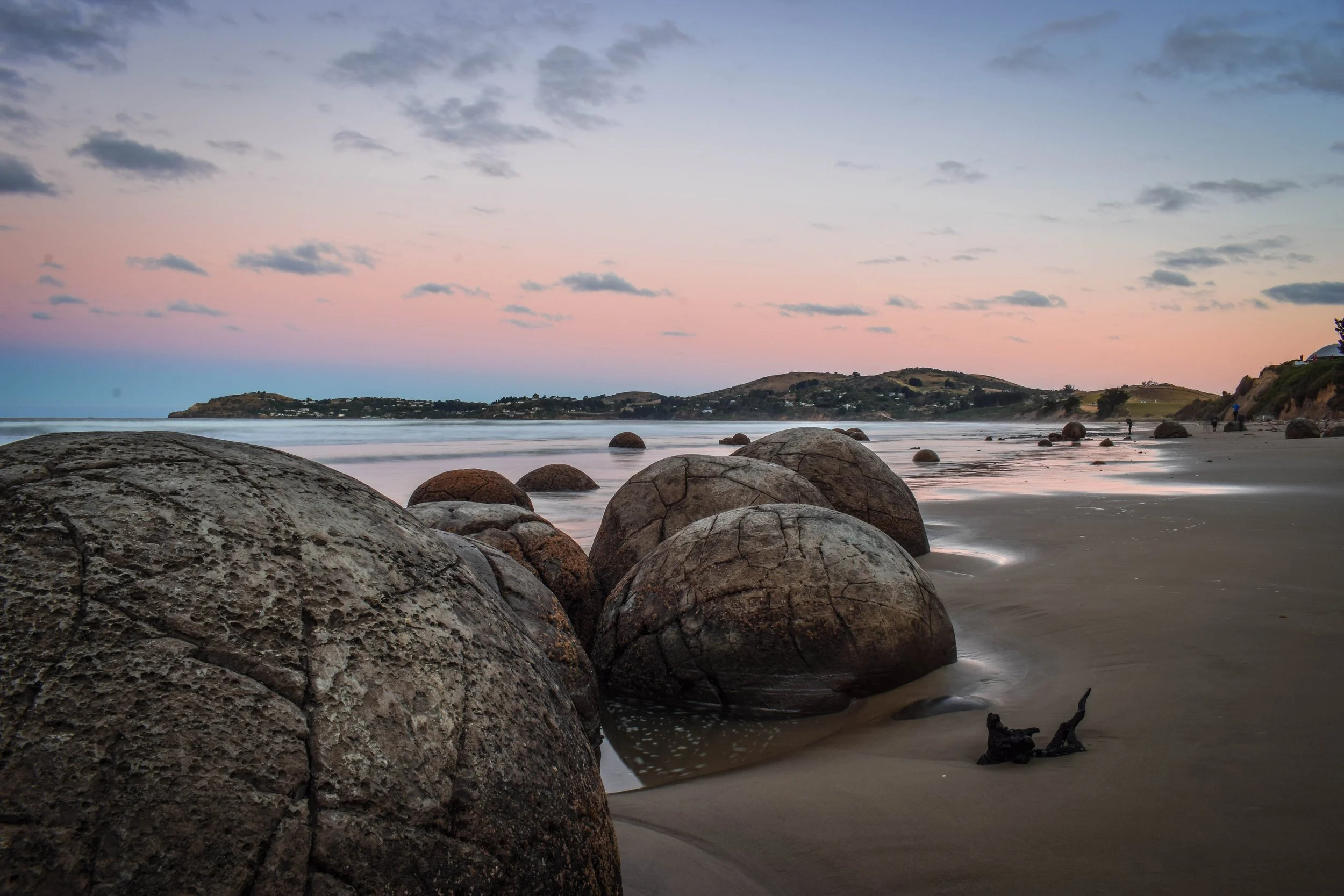
The Moeraki Boulders (Kaihinaki) — the famous, near-perfect spherical boulders scattered along the beach, formed over millions of years. The walk down to them is short and easy, and they're magic at low tide or sunrise.
Katiki Point Lighthouse walk — an easy stroll out to a historic lighthouse with a real chance of spotting fur seals and the rare yellow-eyed penguins (hoiho) heading ashore in the couple of hours before sunset.
Moeraki Millennium Walkway and the beach — gentle coastal walking, big skies, and the kind of long, quiet beach stretches that are perfect for clearing your head between workshop sessions.
A morning of flowers, an afternoon walk along the boulders or the lighthouse track, then dinner at the Tavern is about as good as a Saturday gets.
The weekend at a glance
Here's a rough shape for the two days, so you know what to expect. Exact times will be confirmed closer to the date — treat this as a guide.
Saturday — Day one (26 September)
Morning — Arrive, settle in, and gather for the workshop in Kakanui. Get your hands into the seasonal blooms and make a piece for our shared lunch table.
Late morning — Anna's mindset and goal-setting session for small business: a chance to slow down, reflect, and get clear on where you're headed.
Around midday — A relaxed lunch together — lunch is provided, so just bring your appetite.
Early afternoon — Rebecca leads a storytelling session, drawing on her own journey and the foundations of building a sustainable creative business.
Mid-to-late afternoon — A guided walk and foraging down at Moeraki, travelling together as a group (transport provided): the famous boulders, the beach, or the Katiki Point lighthouse track — best for wildlife in the couple of hours before sunset.
Evening — An optional group dinner and meet-up at the Moeraki Tavern, right on the harbour. Good food, ocean views, and time to relax together.
Sunday — Day two (27 September)
Morning — A gentle start. We'll begin by journaling our intentions and take-aways from day one, then head out for a walk on the beach, foraging as we go for our art piece. Rebecca speaks about the intention behind the work, creative thinking, and why sustainable floristry matters so much.
Late morning — We create our large-scale art piece together — an installation that reflects a particular time and place.
Afternoon — A beautiful long lunch to close out the weekend, with time for farewells. We'll wrap up around 3pm.
If you'd like to keep exploring after we finish, the wider Waitaki is well worth an extra afternoon or day (see the highlights below).
Waitaki highlights worth the detour
If you've got an extra day either side of the workshop, the wider Waitaki district is full of surprises — it's a UNESCO Global Geopark (the Waitaki Whitestone Geopark), the only one of its kind in Australasia, and the landscape really shows it.
Elephant Rocks — surreal limestone boulders rising out of a green paddock near Duntroon, famous as a filming location for The Chronicles of Narnia. Great for a wander and a photo.
The Vanished World fossil trail — follow the trail through the Waitaki Valley to see ancient marine fossils and the geology that earned the region its Geopark status; the Vanished World Centre in Duntroon is a fun stop.
Alps 2 Ocean Cycle Trail — New Zealand's longest continuous cycle trail runs from Aoraki/Mount Cook down to Oamaru, with gentle sections you can dip into for an hour or a day.
The Waitaki Valley and lakes — head inland toward Kurow and Otematata for the big turquoise hydro lakes (Benmore, Aviemore, Waitaki), autumn colour, and a growing local wine scene.
Frequently asked questions
What should I bring? An apron, comfortable clothes you don't mind getting a little green, and a container or two if you'd like to carry your arrangement home. We'll send a full list closer to the date. Everything else — flowers, tools, and materials — is taken care of.
Is lunch included? Yes — lunch is provided on day one, and a beautiful long lunch closes out day two. Just let us know in advance if you have any dietary requirements or allergies.
Do I need any flower experience? Not at all. The workshop is welcoming to complete beginners and seasoned flower lovers alike. Come as you are.
Where should I stay? Old Bones Lodge in Kakanui is the closest and a lovely group base. Oamaru has backpackers and plenty of cafes, and there are Airbnbs all along the coast. See the "Where to stay" section above for links.
What's happening on Saturday night? We're all gathering for dinner at the Moeraki Tavern, right on the harbour. It's a popular spot, so we'll book a group table — let us know if you're joining so we can save you a seat.
What's included over the weekend? Two days of immersive workshops with Rebecca Noble, mindset and goal-setting sessions with guest Anna Bolland, guided walks and foraging, lunch on both days (including a beautiful long lunch on day two), group transport to Moeraki, and a goodie bag to take home. The Saturday evening dinner at the Moeraki Tavern is an optional group meet-up (you're welcome to cover your own meal). The only other optional extra is extending your stay to explore the wider Waitaki.
Do I need to arrange transport to Moeraki? No — on Saturday afternoon we travel down to Moeraki together as a group, with transport provided.
What time do we finish? We wrap up around 3pm on day two (Sunday 27 September), after a beautiful long lunch and farewells.
Is there a goodie bag? There is — each of you will take home a goodie bag filled with wonderful things.
Booking and contact
Spaces are limited, so we'd love you to book in early. To reserve your spot or ask any questions, get in touch:
📧 dishthedirtpodcast@gmail.com 📱 03450454655 🌐 dishthedirt.com.au 📷 @_dishthedirt_
In short
Kakanui for the flowers, Old Bones (or an Oamaru backpackers or Airbnb) for the bed, Oamaru for the coffee and dinners in town, and Moeraki for Saturday night and the best of the coastal walks — with the wider Waitaki to explore if you can stretch the weekend out.
We can't wait to see you there. Bring your apron, your walking shoes, and an appetite.
Growers Avenue 2026: Bigger, Bolder, and Bursting with Local Blooms
What a year.
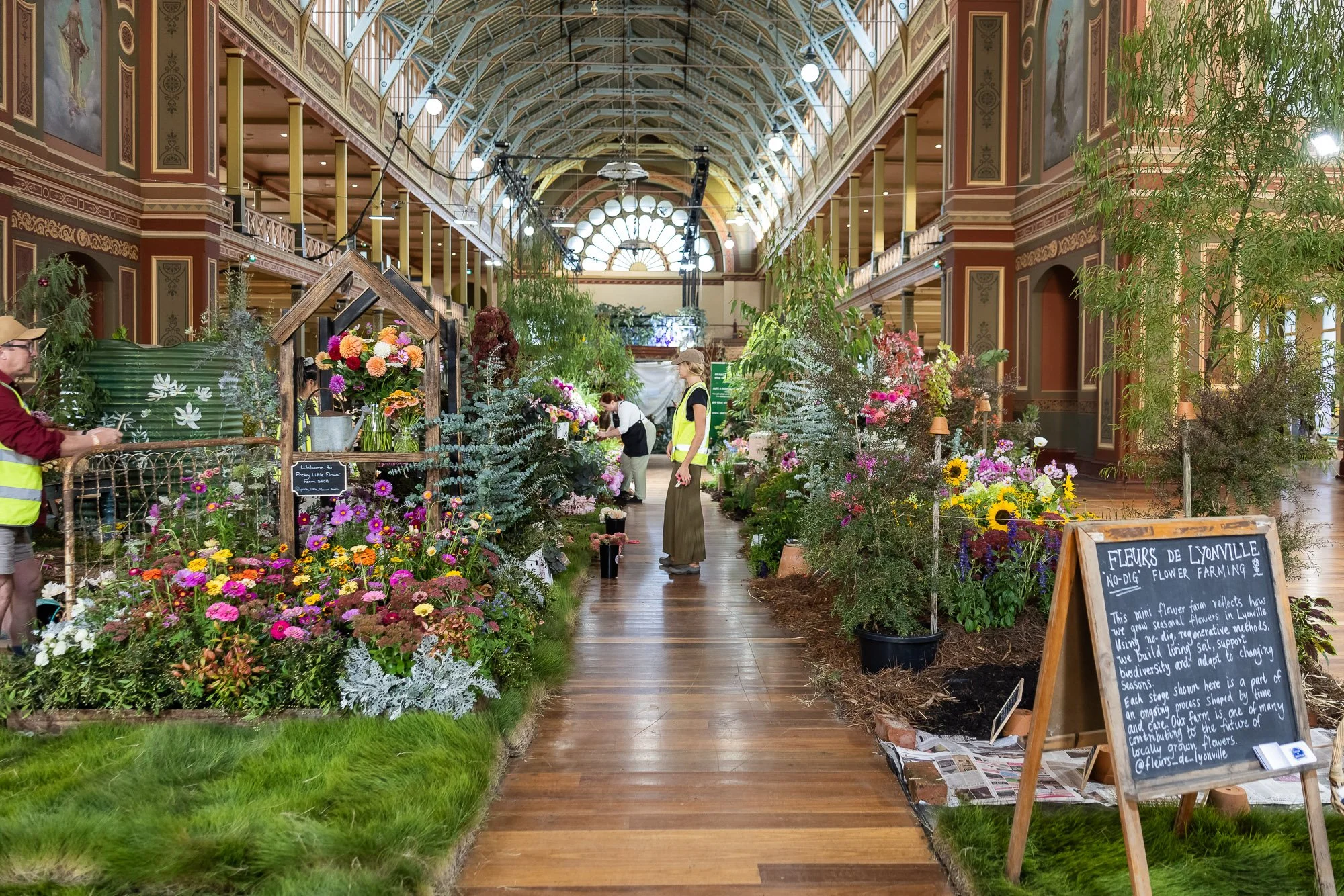
Growers Avenue 2026 at the Melbourne International Flower and Garden Show has come and gone — five big days from the 25th to the 29th of March — and I'm still buzzing from it. We had some truly wonderful growers come on board this year — so many that I'll be giving them each their own moment in the spotlight over the coming weeks. They deserve it.
The planning started back in 2025, almost as soon as the last Growers Avenue wrapped up. I knew straight away that this one had to be bigger. So when we were handed the central stand — 30 metres by 16 metres of space to fill — I'll admit it was daunting, to say the least. That's a lot of room to bring to life. But it turned out to be exactly the canvas we needed.
Here's why having growers at the show matters so much to me. It's not just about putting beautiful flowers on display. It's about the conversations. Growers get to talk, face to face, about locally grown flowers — where they come from, how they're grown, and what it really takes to get a bloom from the paddock to the vase. They share their experiences with each other and with the public, and that exchange is where the magic happens.
This year we also took to the stage, which was a first for many of us. We got to talk about local flowers — some grown right here in Victoria, others coming down from New South Wales — and what makes them special. It was a chance to remind everyone walking through that Australian-grown flowers aren't a niche curiosity. They're seasonal, they're stunning, and they're grown by real people just down the road.
That's what I keep coming back to: how important it is for the public to see this. To understand that the flowers they buy can have a story, a season, and a grower behind them. Once people see what's possible with local blooms, they don't forget it.
To every grower who came on board, gave their time, and helped fill that enormous stand with colour and life — thank you. You made Growers Avenue 2026 everything I hoped it would be, and more.
Stay tuned. I can't wait to introduce you to each of them properly.